The Habits of Zwolle

How well do we know the city we live in?

We are looking for the power of interruptions, bodies or instructions on habits. How can we change the usual, the habit, and what does someone need to be willing to change their usual? And how does this work in city environments, like Zwolle, where things can feel automated? By sharpening our focus on a specific area of research, in this case Zwolle’s city center, we can define specific assets we want to explore. Through doing so, our knowledge of the city’s habits increased in a multitude of ways, assuring we could interject, interrupt and find overlap in the powers we that shape our experience. 

Some of the questions we asked ourself starting off in this research, were:

Can you recognise a city only by its sounds?

What are power (im)balances we notice in people exploring the city?

In what ways can we take away power from technology when it comes to city exploration?


Is encountering interruptions a loss of power or do interruptions hold their own power?

Is there power in predictability or the unpredictable?

Our Goal:

Redistributing power within Zwolle’s City Center through interrupting current (harmful) habits.

Areas of research

What do we see when we don’t look at eye level? What do we notice when we’re homed in on a certain colour or object? Can we categorise zwolle by things we normally don’t notice?

In what ways can we explore the city away from phones and screens, without the need to focus on efficiency? In what ways can we encourage others to look at the city through the lens of intuitive exploration?

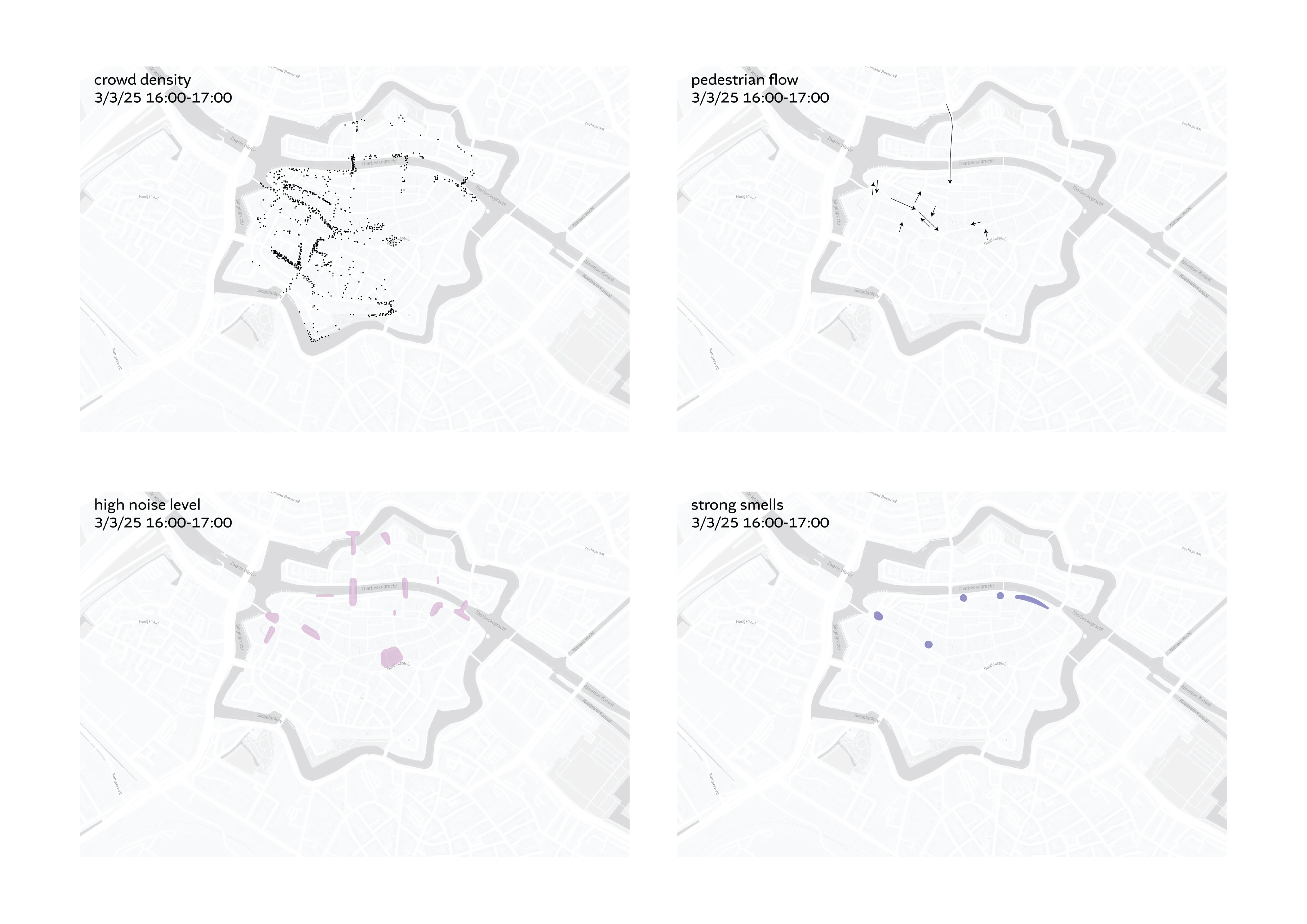
What does zwolle smell like? what does it sound like? How can we compare these smells and sounds to other places around the world – what makes zwolle unique?

Where do people gather, where do they stay away? In what ways can we interrupt or allow for more flow in the city center? 

Initial approach:
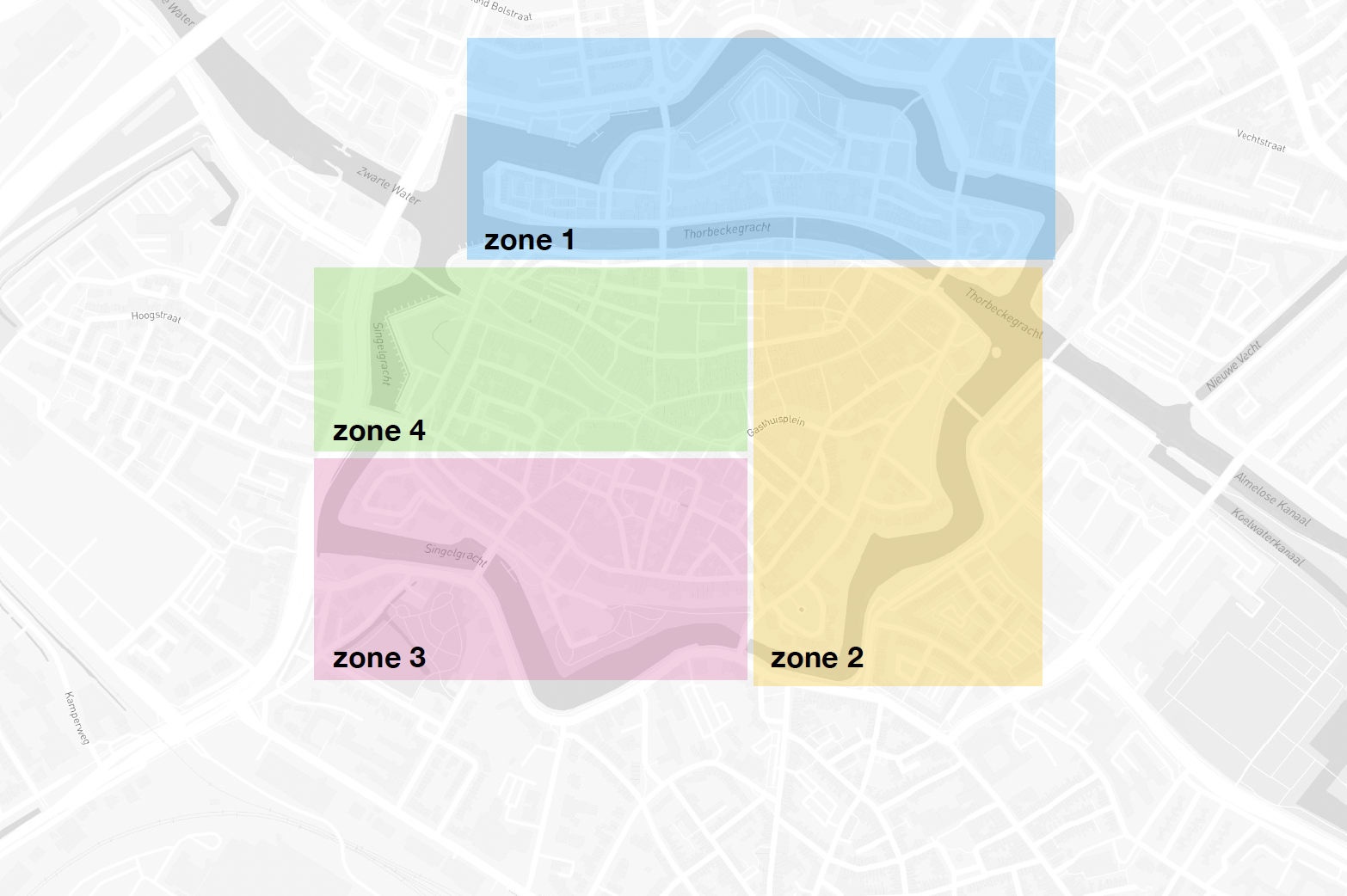
Zone mapping

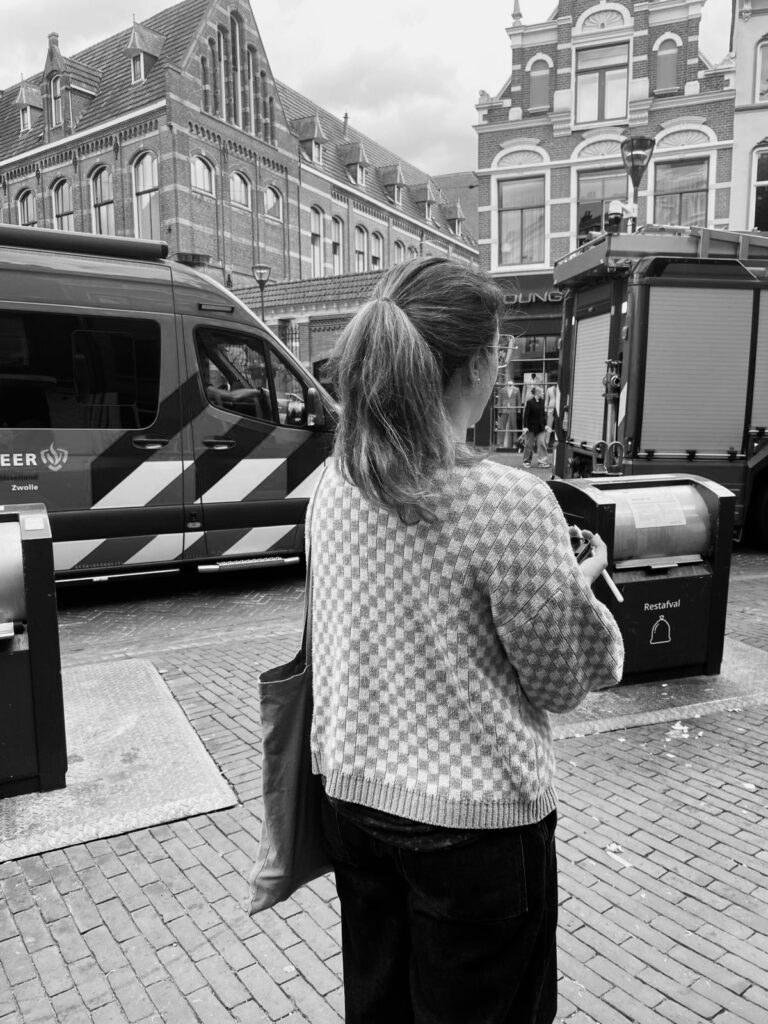
Every Monday, we walk through our respective areas in Zwolle’s City Center. We map, record, notice, and experiment. Through this method, we aim to find habits in all shapes and sizes: Harmful, Powerful or perhaps Powerless. With our experiments, we want to break the current norms of our chosen research areas. 

Duration: 2 weeks

Pros: 

  • Covers a large area quickly
  • The results can be easily compared per one area

Cons:

  • Everyone maps slightly differently, causing confusion
  • Everyone notices different things, causing a lack of focus
  • Results are not easily compared across areas

Zone mapping: findings

Week 1

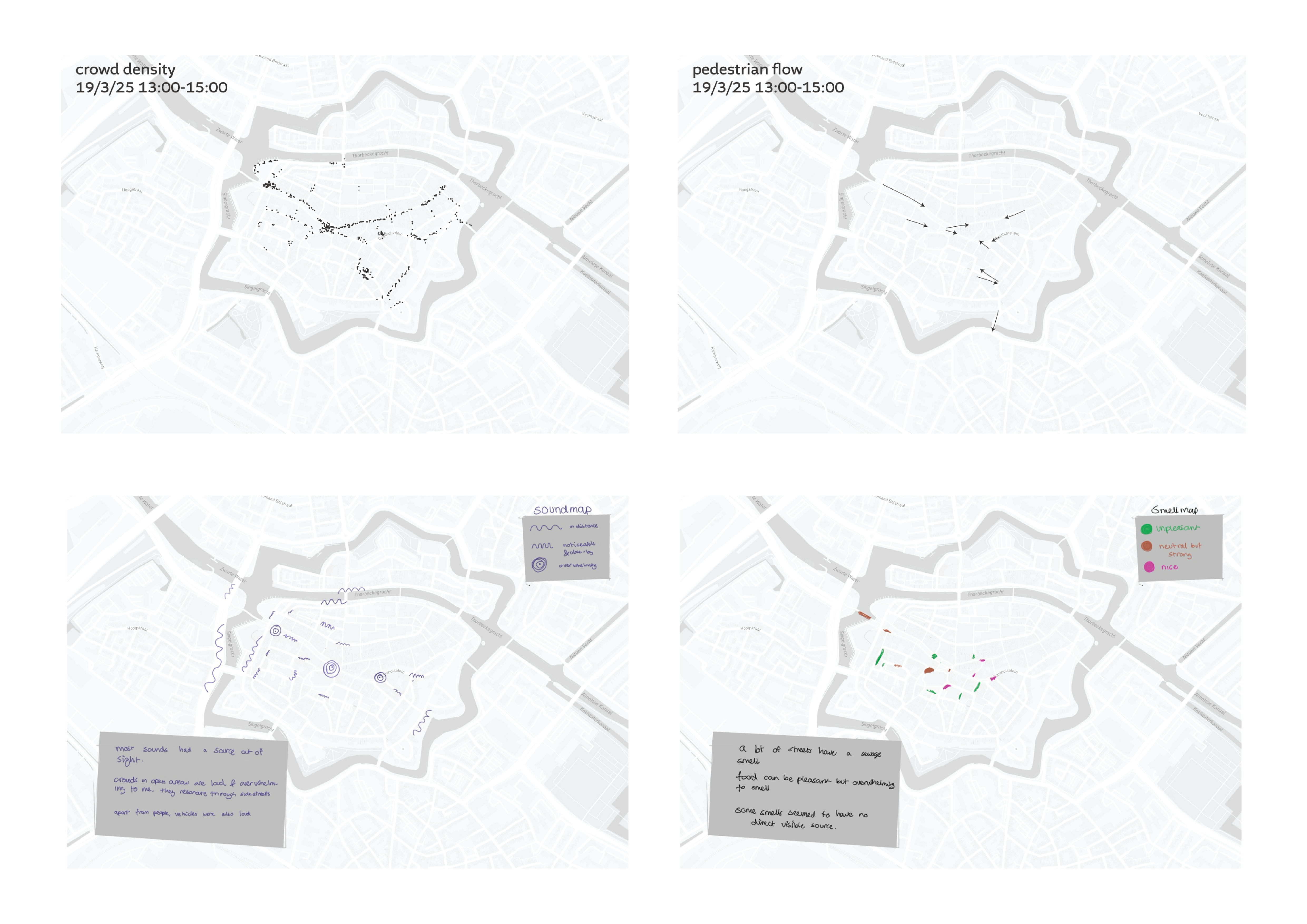
During week 1, we went out during Carnaval, a Dutch Holiday. Big crowds had gathered, the city was filled with music and people, and a parade trotted by. 

Things Noticed:

Week 2

During week 2, the results were vastly different. The lack of event was part of this, but also because people were dispersed differently due to sunny weather.

Things Noticed:

Experiments done while mapping

Lorem ipsum dolor sit amet, consectetur adipiscing elit. Ut elit tellus, luctus nec ullamcorper mattis, pulvinar dapibus leo.

Changing our way of mapping

We realised after two weeks that the results from our initial mapping strategy were not easy to read. We also had trouble comparing each others maps. This needed to change, as we wanted to be able to conclude things from our mapping strategy. We then switched gears: how can we get clear results, which we can later compare to one another? 

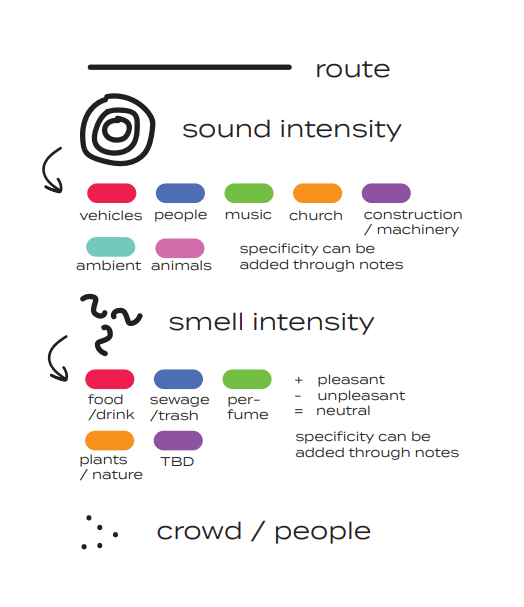
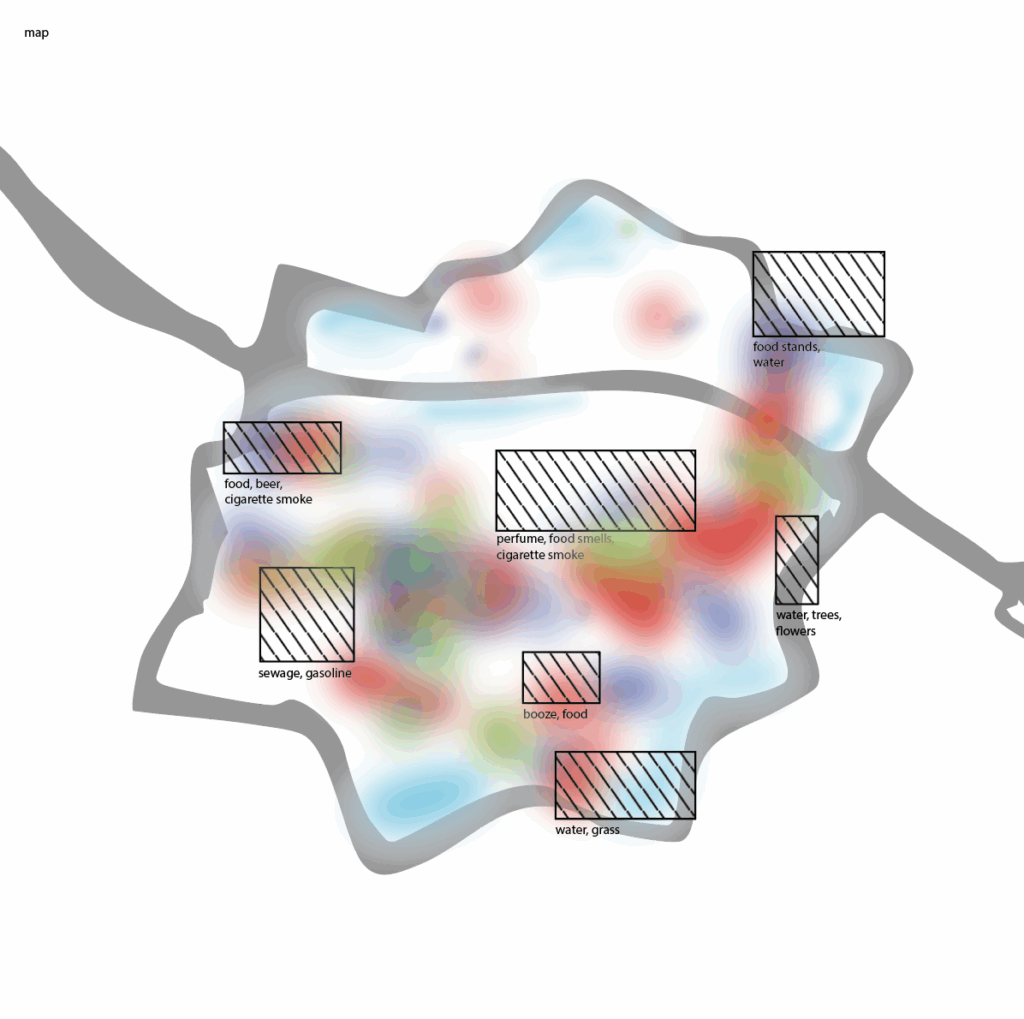
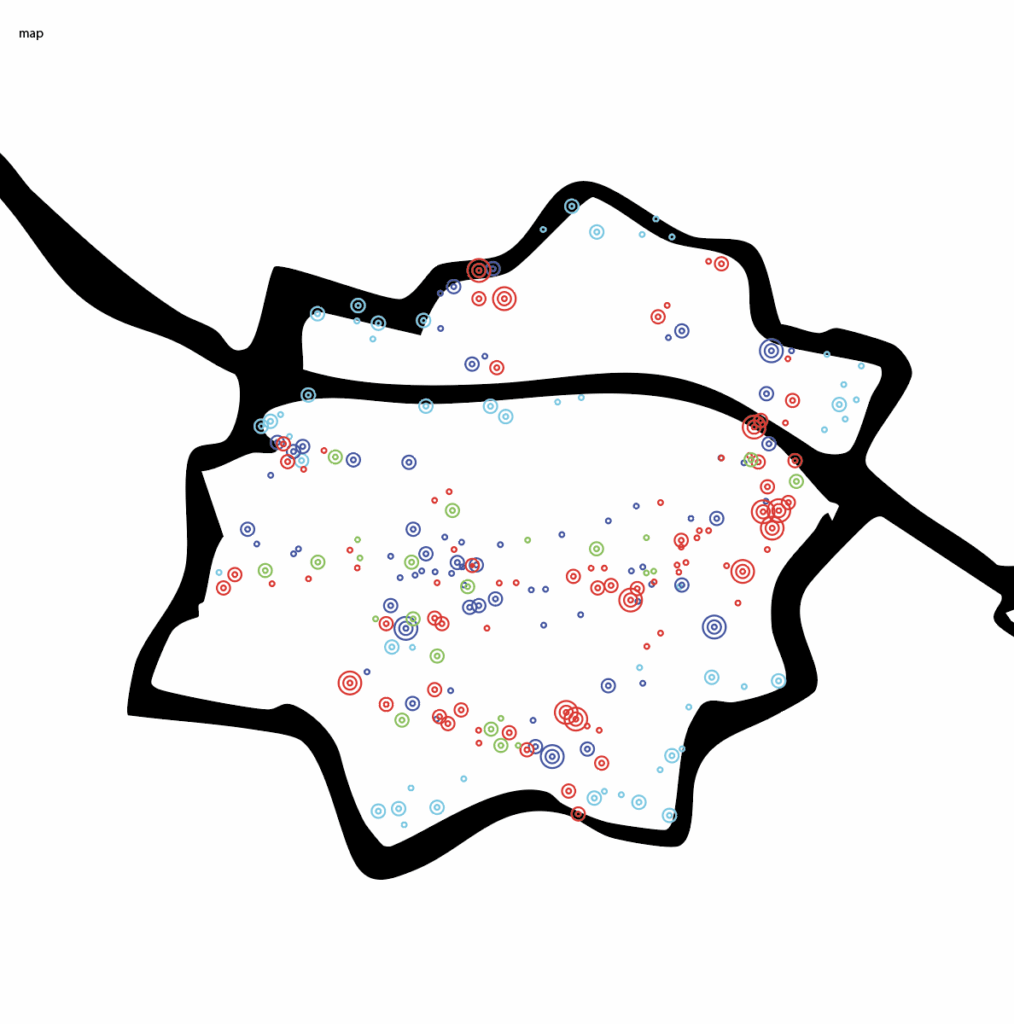
We used our existing maps to determine which type of sounds and smells each of us had noticed, and created a legend out of it. We would use colours and patterns to distinguish what we heard and smelled on our walks. 

Line mapping

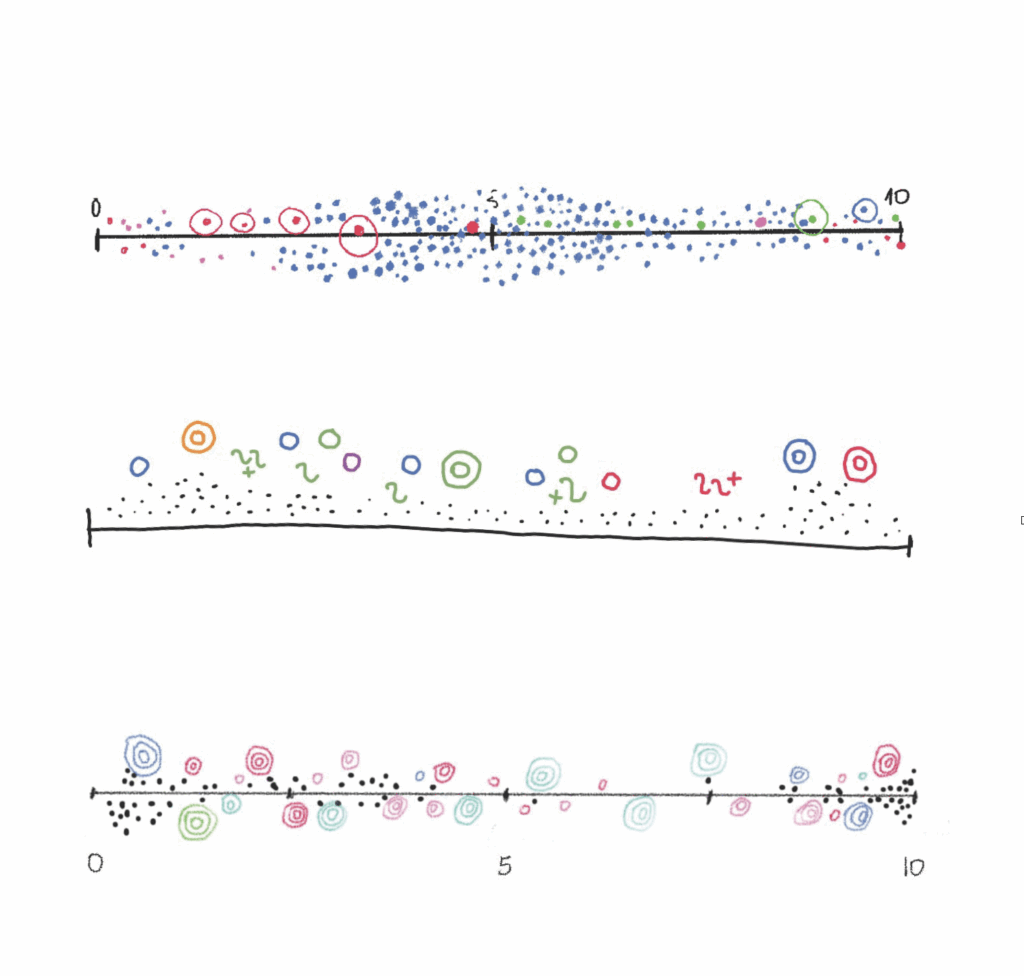
Initially, without using maps, we wanted to record our findings on short stretches of walk. We would walk around randomly, set a timer for ten minutes, and as we walked, we would note our findings. These maps look visually interesting, but then it could not be easily determined which area of Zwolle they belonged to. 

Watch the line map progress

Mapping with the legend

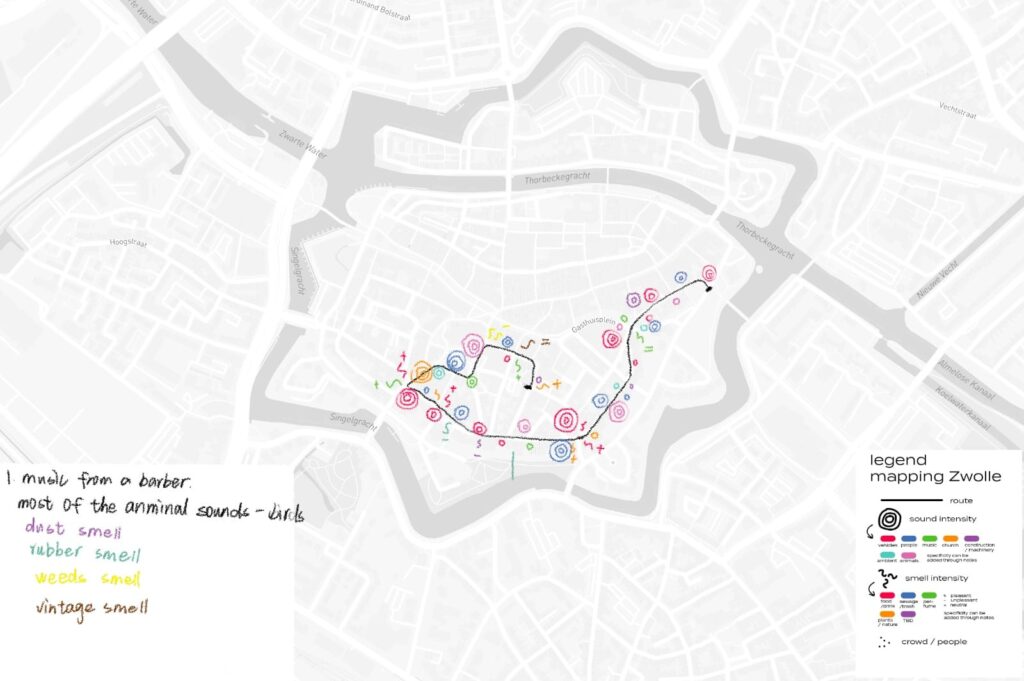
We then went back to our original method of mapping, but with the legend, patterns and colours as an added component. 

We did this often, every week, each on our own, and then in different areas every time. In the end a striking image revealed itself, knowing where certain smells, sounds, and people were coming from, we now knew where to interact, interject and interrupt.