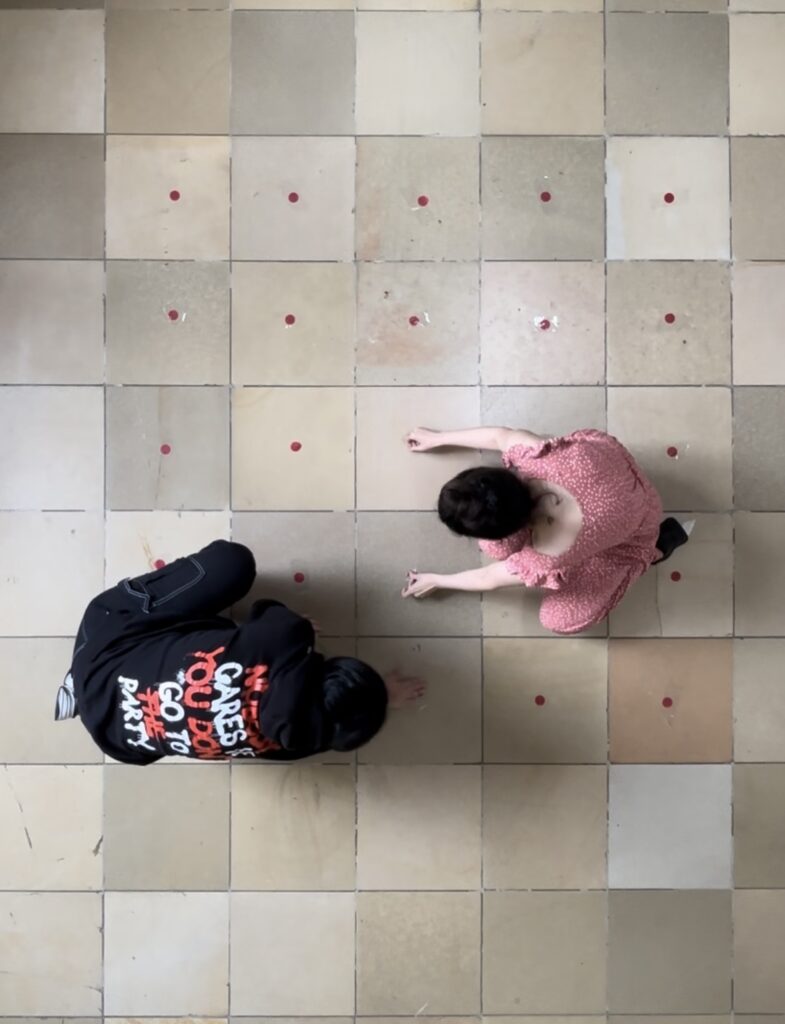
Power by space is a collection of experiments done by Corpo-real students. Corpo-real is located in Zwolle, where students and tutors develop a research-driven spatial design practice geared towards an unknown future.

Habitual Gestures

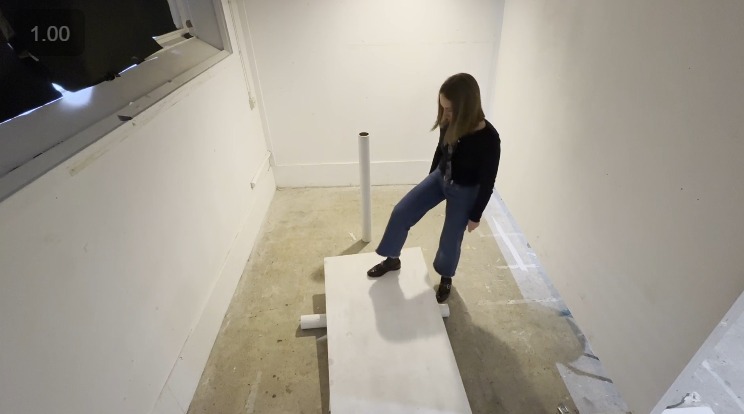
Areas of Research habits in conversation use of gestures and body language unexpectedness in conversation we conducted 3 sets of experiments under the topic of “interrupting habitual gestures” having ourselves as the interruptions in the experiments. Experiment 1: Interrupting Body Language https://powerbyspace.artez.nl/wp-content/uploads/2025/03/body-language.mp4 Asking 2 people sets of questions related to

Walking music “one”

Research question Does the song’s speed affect the way of walking and paying attention to the environment? Experiment We played a piece of music that was performed at different speeds for the participants and asked them to walk in the space while listening to the music. Findings Change in the

Experiment: Power Relations (Familiar Setting)

Based on our previous experiments, we wanted to find ways to break the power that being put in a higher position gives us. To do so, we created a setting in which one person gets the task to read a text to another person. To compare different situations, we changed

Walking music “two”

Research Question: How do different elements of sound (speed, tune, quality) influence movement patterns and spatial perception in individuals? Experiment We conducted an experiment to explore the relationship between sound, space, and movement. Participants listened to different repetitive sounds produced by various objects, such as balls moving in circular patterns.

Scent Vocabulary

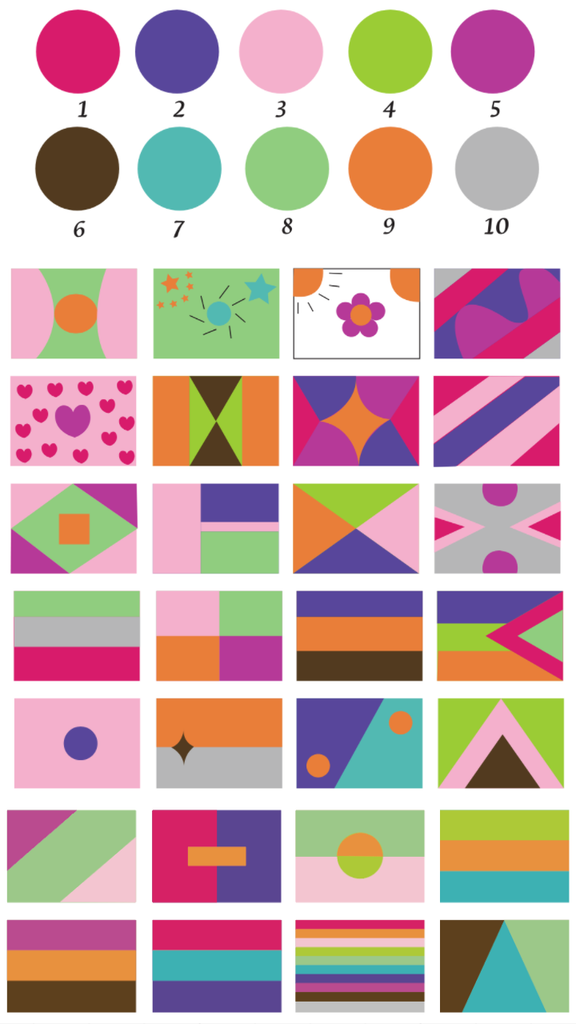
We aimed to explore the power of scent perception by engaging participants in a multi-sensory experience. Students were exposed to unfamiliar odors and tasked with visually representing the smells through collages of colors and shapes. Additionally, they used cut threads to symbolize the volume or length of each scent. This

Privacy

Testing privacy. When are we feeling safe? By playing with light and reflection, places are created where you are visible from one side and not from the other. This makes you feel safe.

Signs “two”

Research questionCan we bring the power back to the signs, by implementing them in playful ways into the interior of the space itself? Experiment After the experiment “Signs one”, results showed that the classic design of the sign does not work on human any more, even if being placed in

Hidden Gems of Zwolle

“Our exploration of Zwolle’s city center revealed places that often escape the attention of both locals and visitors such as quiet corners, overlooked details, and unplanned beauty that lays in the everyday. We call them hidden gems, the spaces that invite to pause and reflect with a sense of curiosity.

Effect of sounds

Research question How can sounds influence our perception of a space? Can sounds have a calming effect when listened to? What do these sounds represent? Experiment Drawing to visualise the perception of the sounds. To explore this question, 5 people are requested to listen to 4 different sounds. While hearing

Habits in Wayfinding

Intuitively exploring unknown places without the use of technology When thinking of harmful habits, the use of screens and technology  was one that popped into mind quite quickly. When applying this habit to wayfinding and exploration, we noticed that a lot of us rely on applications such as Google Maps

Weather and Emotions

Emotion-weather maps are a type of thematic map used to represent emotions. The maps represent spatial distributions of complex emotions from a large group of people. Most related work focuses on a simple sentiment and draws its distributions on a map. I feel unstable when I experience this structure. Every line

Memory / blindfold maps

Research question How does changing our sensual input affect our perceptions of a space? Experiment To first explore this question we focus our experiment on the sense of touch. When it comes to navigating and becoming familiar with space we often rely on sight and sound to get around. Touch,

Embodied research

EMBODIED RESEARCH “Our possessions are a major contributor to and reflection of our identities” Belk, Russell W. “Possessions and the Extended Self.” Journal of Consumer Research 15, no. 2 (1988): 139–68. http://www.jstor.org/stable/2489522. Our project started with the point of power that has come with devices. Devices, especially phones, have a

Record non-powerful places

Research question Is sound a factor in how we perceive unpowerful spaces?What are the characteristics of sound in unpowerful spaces? Experiment To fully understand our task of spreading power through space, we first had to explore the power dynamics of space. We visited spaces we felt were inherently powerful, but

The Habits of Zwolle

How well do we know the city we live in? We are looking for the power of interruptions, bodies or instructions on habits. How can we change the usual, the habit, and what does someone need to be willing to change their usual? And how does this work in city

Sounds around the world

“Which Ones Have You Heard?” Wander with the melody and listen to the world in all its diversity. Every city, every country, has its own unique sound. whether it’s the bustling rhythm of daily life or a touch of romance in the air. Urban symphonies echo through every corner, day

Escapism through the senses

Introduction In this experiment, we aimed to investigate the impact of sensory deprivation and auditory stimulation on imagination and a feeling of escapism. Three participants were blindfolded and transported to an unfamiliar location. Once there, they were provided with headphones and instructed to explore the space using only their sense

Making sounds in a space

Research questions What sounds are hidden within a space and its materials and objects? How do different materials produce different sounds when struck or interacted with?  Experiment In this experiment, we aimed to explore the power of sound within different spaces byutilizing various materials and objects. We conducted this experiment

Adaption

This series of drawings is about basic adaptations of a simple tent. Within this research we tried to uncover what different adaptations of the same tent could mean for the social structure of a small community. We noticed that different shapes result in different gatherings.​

Language Unknown

The inspiration for this experiment originates from the Museum of the Future in Dubai, where the museum’s walls are adorned with intricate Arabic calligraphy. This creates a uniquely multidimensional linguistic space, blending visual and verbal elements. The engraved Arabic calligraphy not only serves as an aesthetic feature but also as

Record powerful places

Research question Is sound a factor in how we perceive powerful spaces?What are the characteristics of sound in powerful spaces? Experiment To fully understand our task of spreading power through space, we first had to explore the power dynamics of space. Some spaces are identified as inherently powerful. Still interested

Experiment: Power Relations (Unfamiliar Setting)

We noticed that our results from the first power relations experiment may be not entirely representative, as our classmates knew what we were researching (if you have not seen it, click here). Therefore, we decided to conduct the same experiment again with strangers. We went to the conservatory and asked

Power through Humour

How can we make the power of humour usable? To answer this question, we tried to understand the relationship of power and humour by researching through both theoretical desk research and practical experiments. Our topics developed from body language and awkwardness to an investigation of professional comedy, until we studied