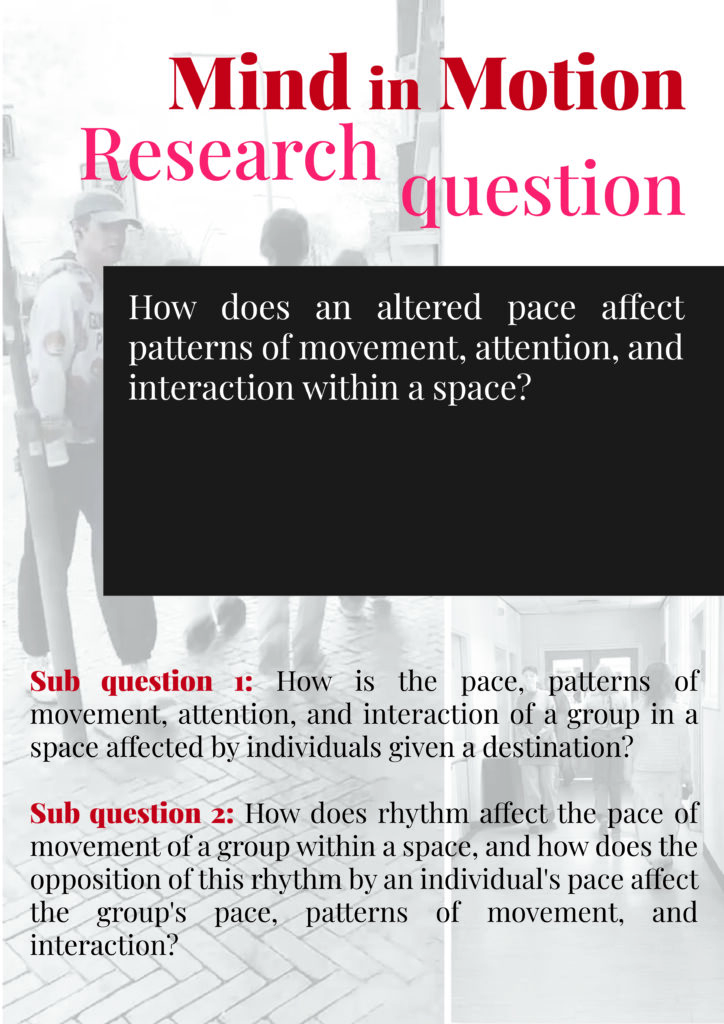
In the early stages of exploring how the pace can affect on attention and interaction of people in a space, we started to observe people’s movements in public spaces and for the documentation we used different ethnographic modules like sketching, photography and video recording. Then we came up with two sub questions:
1- How are the pace, patterns of movement, attention and interaction of a group in a space, affected by individuals given a destination? 2- How does rhythm affect the pace of movement of a group within a space, and how does the opposition of this rhythm by an individual’s pace affect the group’s pace, patterns of movement and interaction?
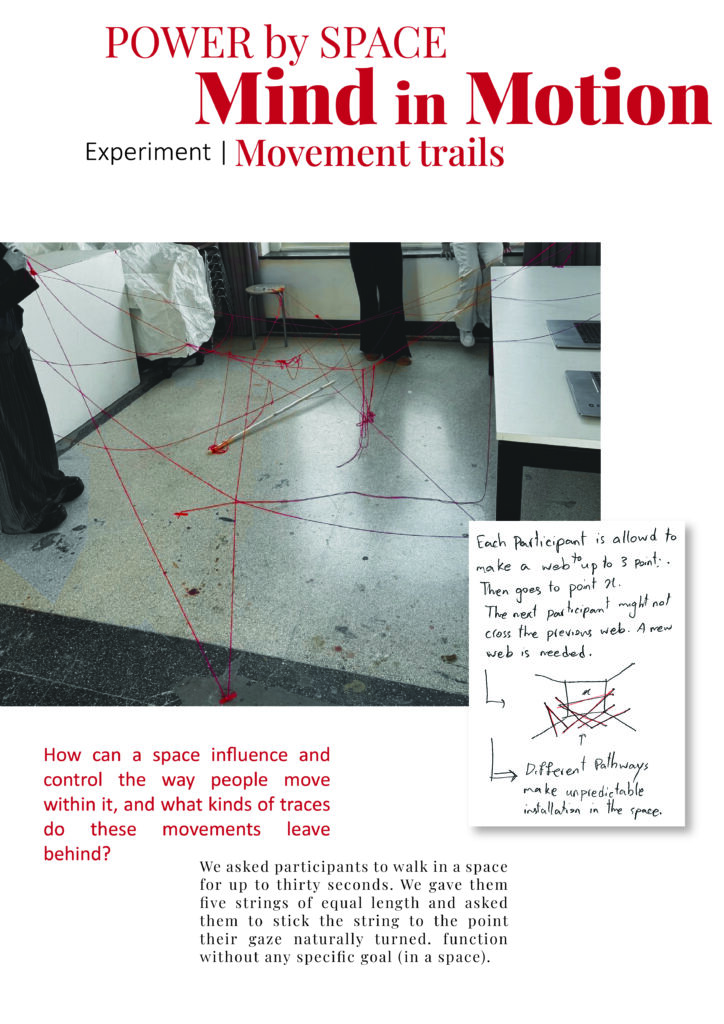
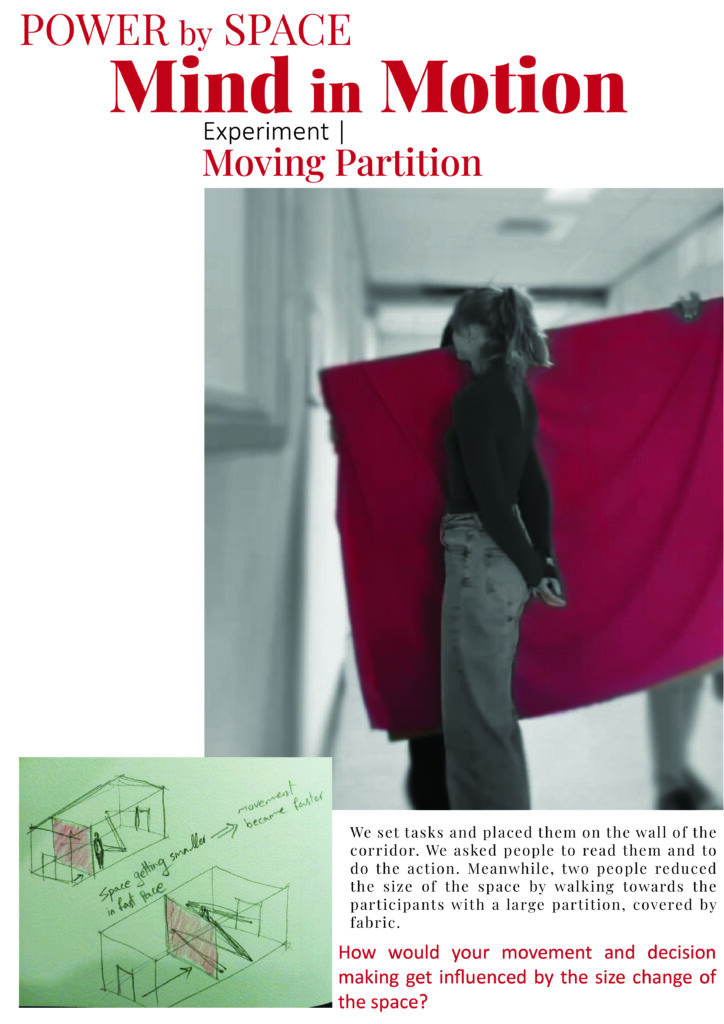
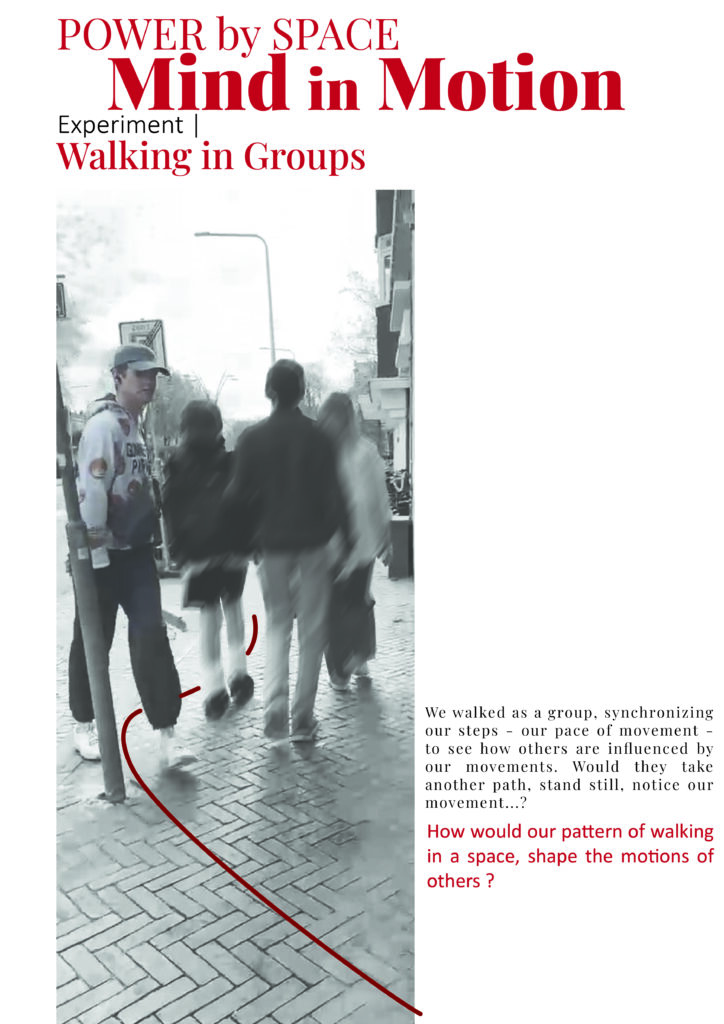
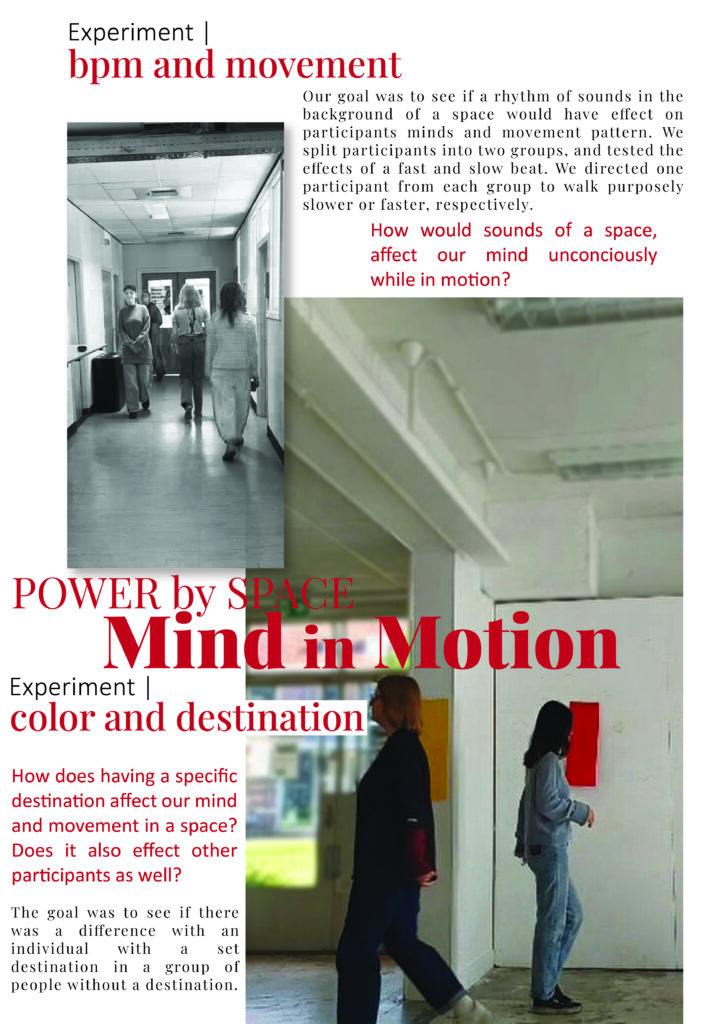
After doing the experiments it became clear that when there is a task defined for people moving in a space, they are so into processing it and make it done that they barely pay attention to what other users are busy with or what other elements are inside the space. They just do what they have to do!
On the other hand, sounds in the background of a space has their influence on user’s pace and pattern of movement. with fast bpm, they synch to move fast and with slow one they move slow. Here comes the interesting part: When a fast bpm was played and then asked a participant to walk slowly, it was a conflicting situation because the person unconsciously wanted to synchronize the walking with the bpm but the defined task was preventing from this action.
While walking in a group toward other’s path, we could see they change their way because us as an external lever are affecting the way of their movement.
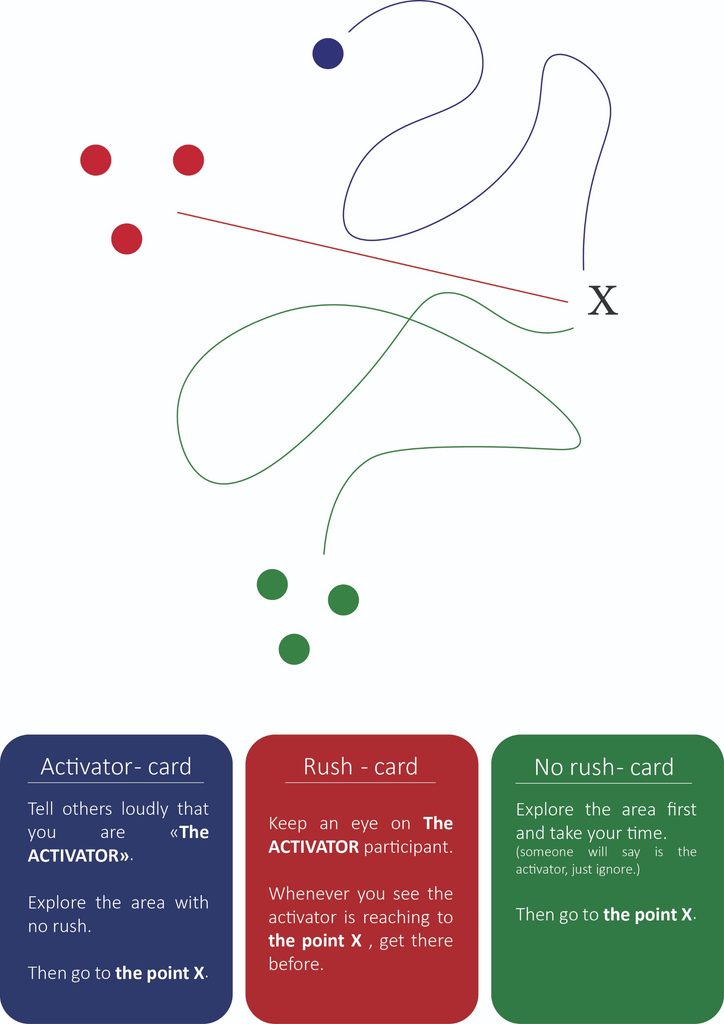
We designed cards as instructions for participants to go forward with the experiments. as its result, it was seen that when we tell instructions to people, they get focused on doing the task. Also, it was seen that how movement and acts of people can influence the mind of others in their movement pattern.