Flag Experiment
What is projective method?
Projective techniques are indirect, unstructured research and psychological methods used to uncover unconscious motives, feelings, and beliefs by having individuals interpret ambiguous stimuli. Instead of direct questioning, they use methods like picture interpretation, sentence completion, or role-playing, allowing subjects to project their inner emotions onto the stimulus.
How did we use it?
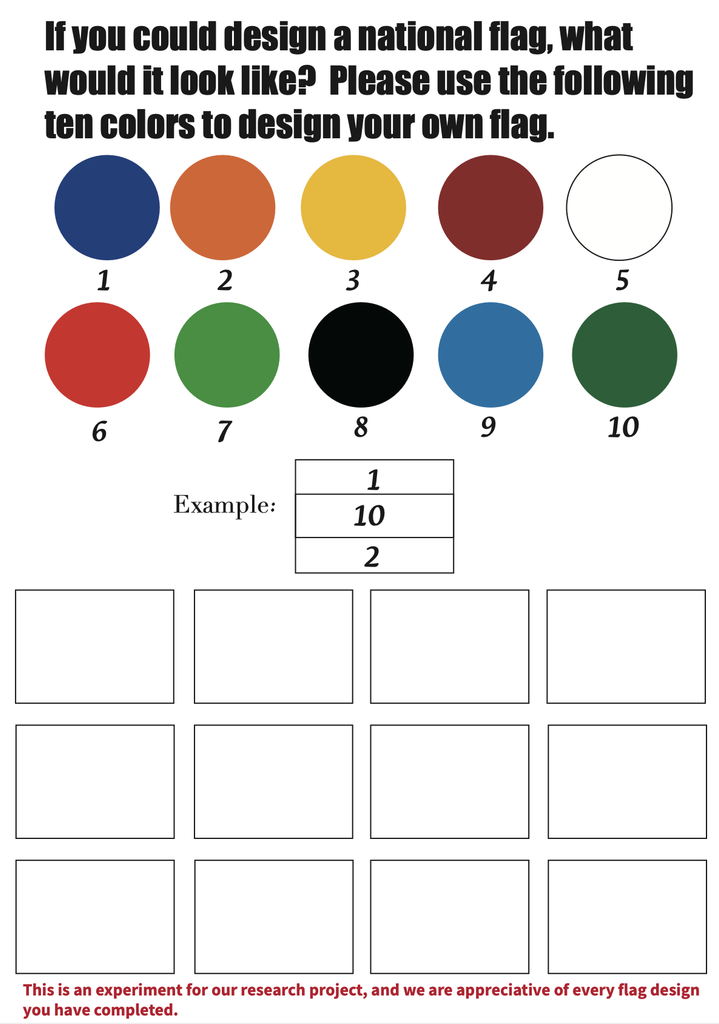
Because we don’t ask people directly, “Which color represents power?”, but let them design it themselves, they unconsciously project their own associations onto the result. This makes it an indirect measurement method.
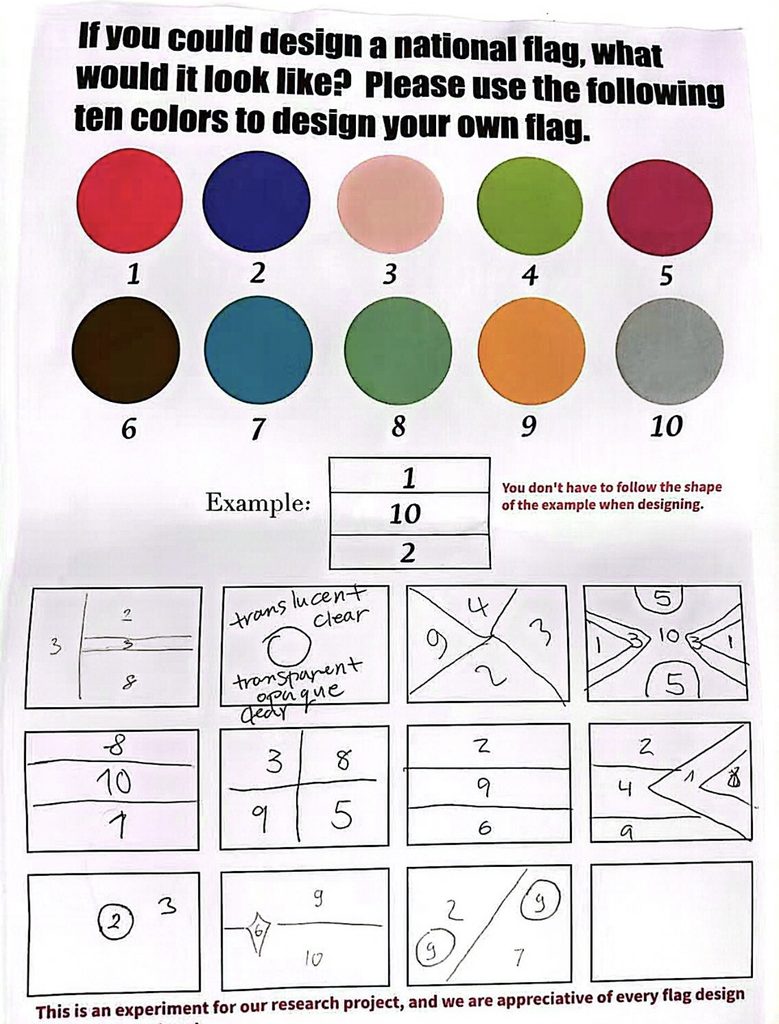
What were the results?
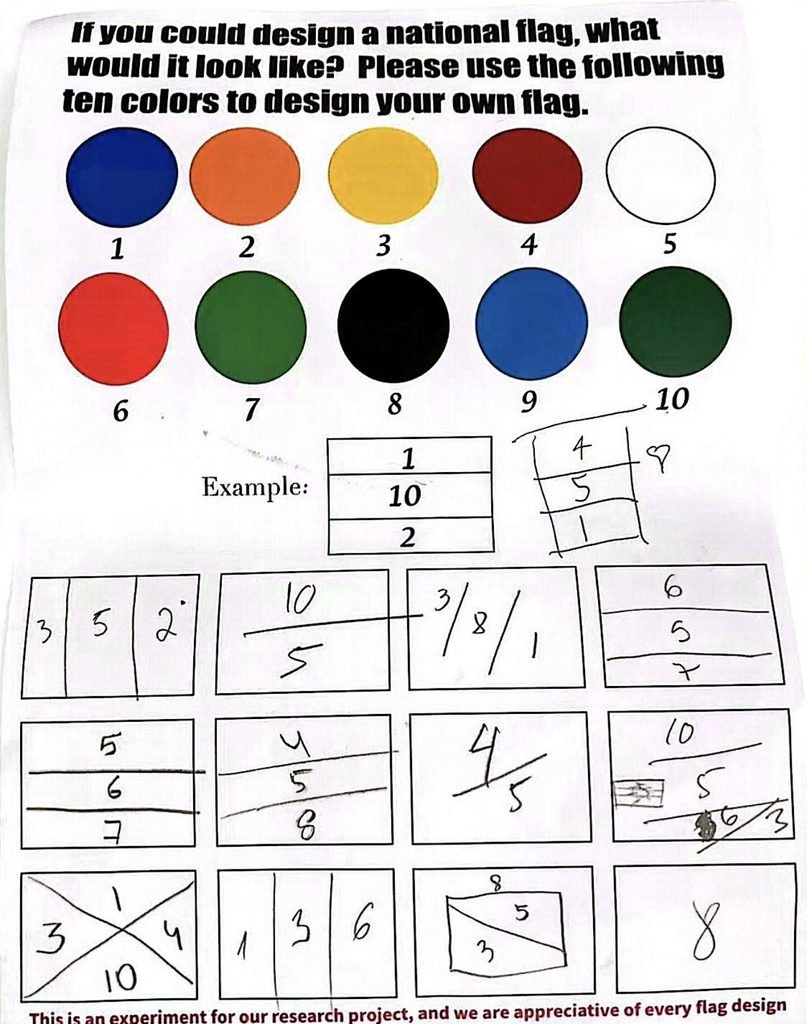
The flag experiment reveals how color and context strongly influence design mindset. When participants worked with a traditional, primary color palette, their designs closely resembled existing national flags, using symmetry, stripes, and familiar political symbols. This resulted in a more structured, rational, and rule-based approach, where color functioned as a form of political discipline.
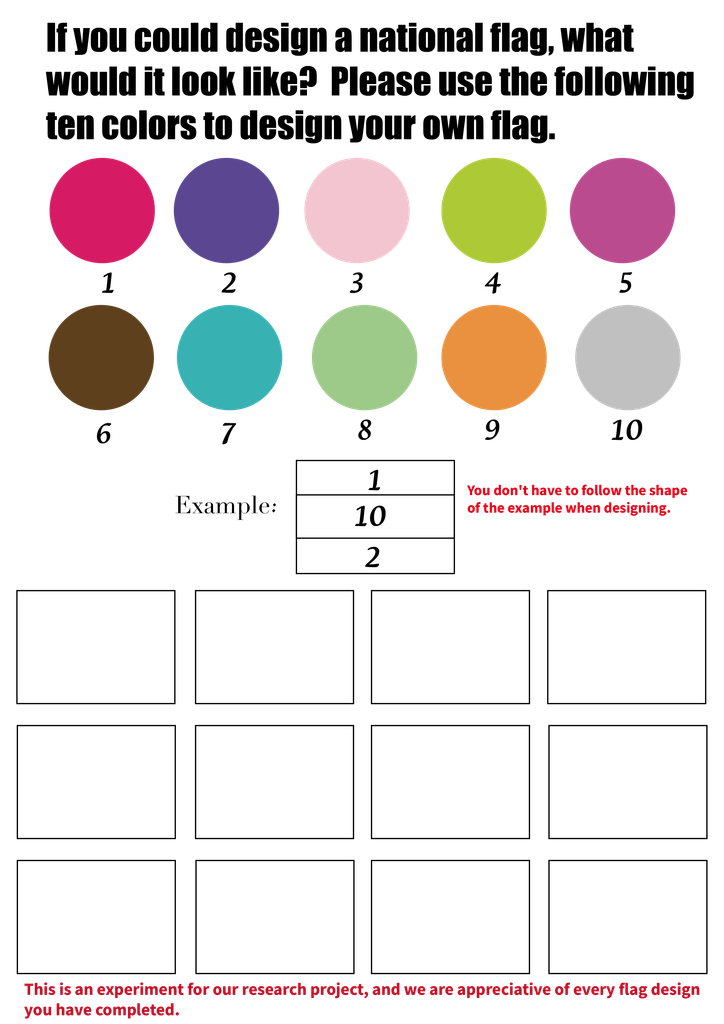
In contrast, when participants used a more playful and unconventional colour palette, the designs became abstract, diverse, and expressive. Participants moved away from established flag conventions and instead designed based on feeling, creativity, and personal identity. Here, colour acted as a form of freedom, enabling experimentation and emotional expression rather than reinforcing existing systems of power.
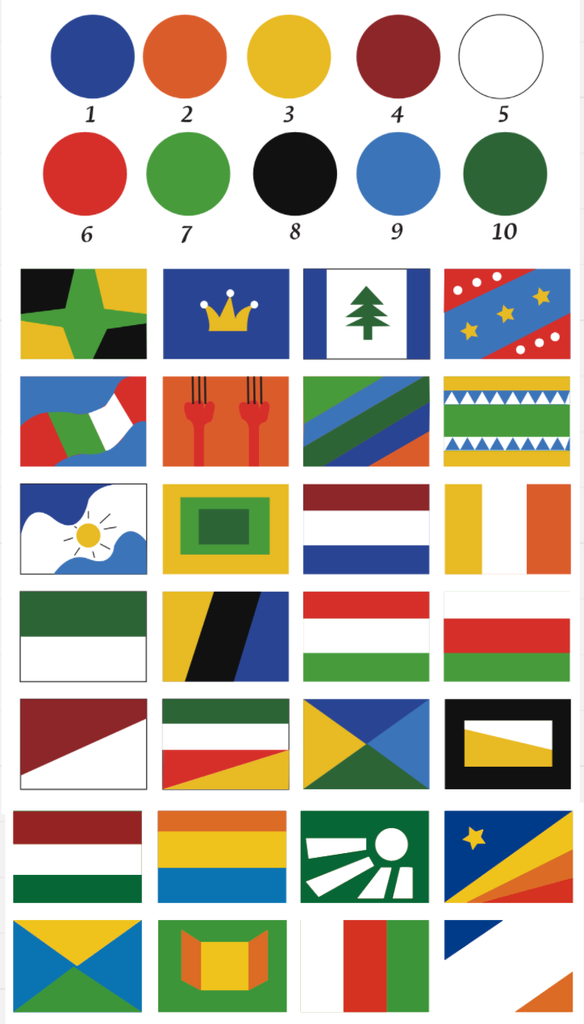
Colour here performs a form of political discipline.
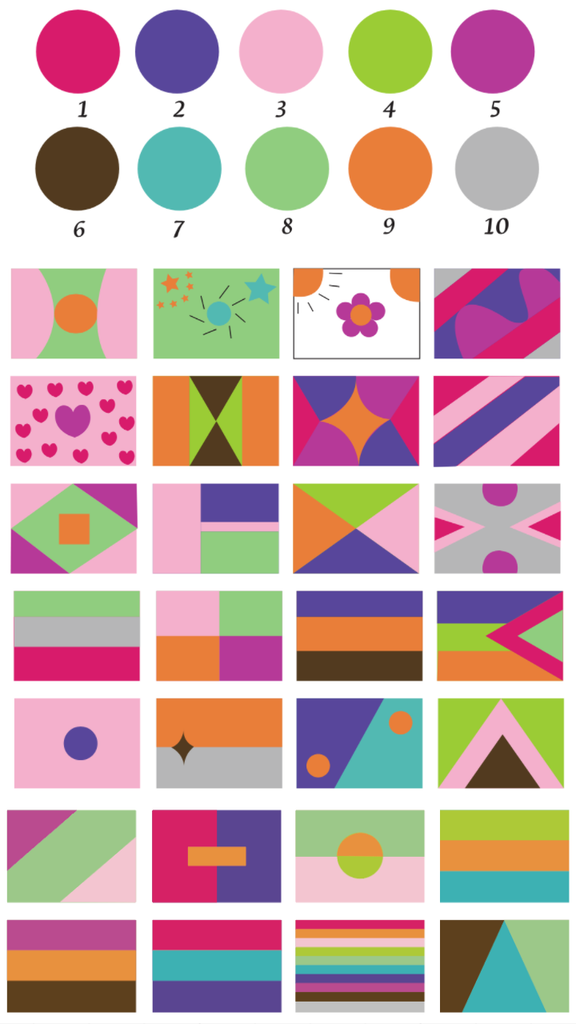
Here, colour becomes a form of freedom, an open field without rules.
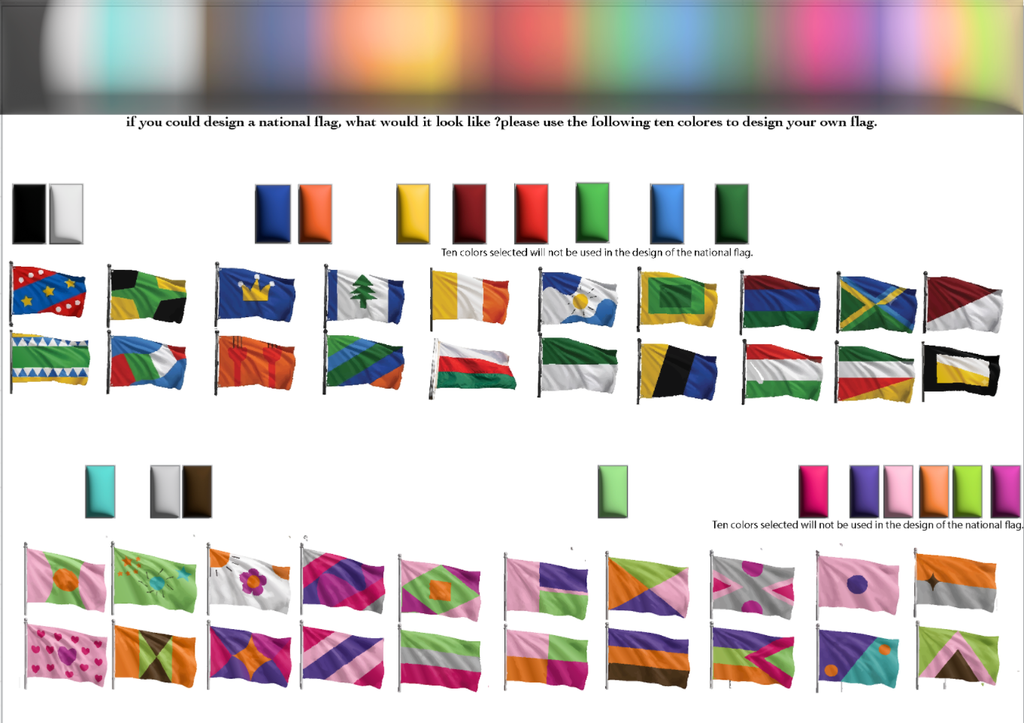
What did we learn?
- Different color sets led to very different design outcomes.
- The location where the questionnaire is placed also affects the results.
- Whether participants received clear instructions beforehand or not also led to different outcomes; sessions with instructions were more formal, while those without were more casual.
Cognitive Memory Experiment
Goal:
The goal of this experiment was to investigate ” How color influences memory retention” by comparing “primitive” color schemes with more playful, complex ones. By translating previously designed flags into a memory card game, we aimed to test whether simpler, primary colors are more easily retained in long-term memory, while more playful color compositions would rely more on short-term memory and therefore to recall.
Result:
The result showed a slight tendency for the playful color sets to take longer to complete, supporting our initial assumption. However, the time differences between the two conditions remained relatively small, typically ranging between 10 to 30 seconds. Feedback from participants indicated that difficulty was often influence more by the complexity of shapes and compositions rather than color alone. This suggests that visual from plays a significant role in memory performance, and that color cannot be isolated as the sole determining factor.